
Horses of Hoofprint Bay Traits Quirks: Every Trait Explained
All Horses of Hoofprint Bay traits quirks from the in-game library: what each does, which are testable or inheritable, and how players say they affect breeding.
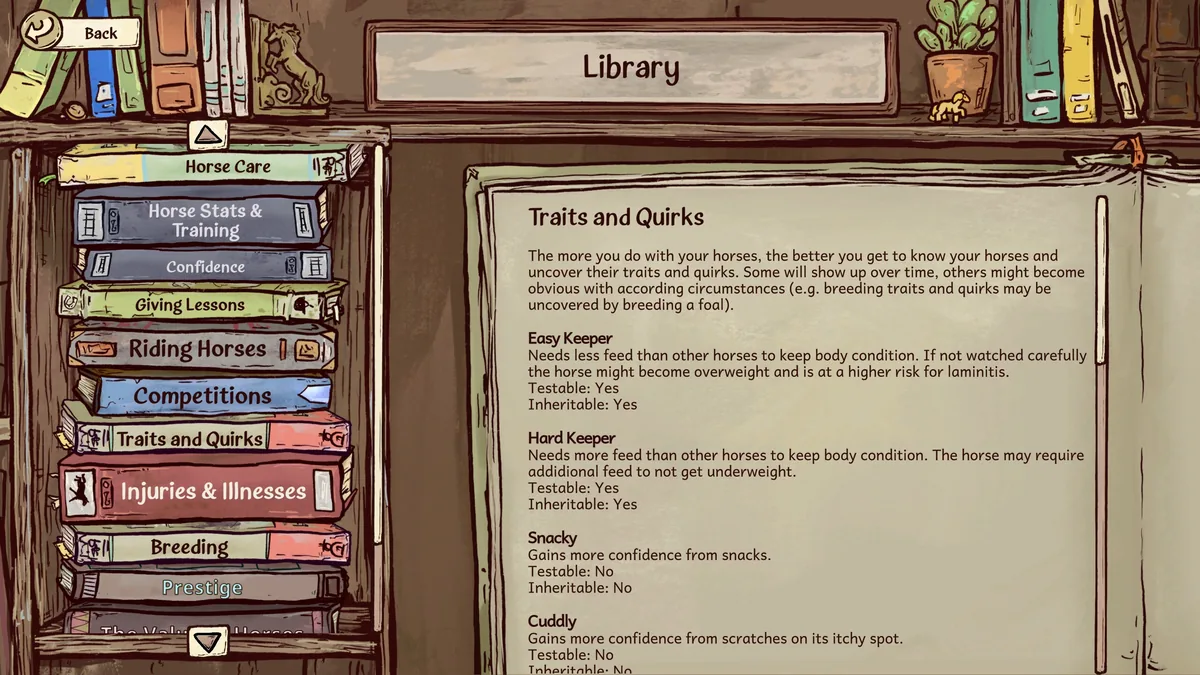
Every horse in your yard has its own personality, and the Horses of Hoofprint Bay traits quirks system is what makes one mare a clean, easy keeper and another a rebellious mud lover. This guide lists all Horses of Hoofprint Bay traits quirks from the in-game library, explains which ones you can test for or pass to foals, and collects what players have worked out about how they change riding and breeding.
Traits matter most when you buy and breed horses: a hidden "bad inheritance" or an injury-prone horse can quietly cost you money. The official Horses of Hoofprint Bay store page on Steam says foals inherit a mix of their parents' coloring, white patterns and even personality traits.
What Traits and Quirks Do
Personality traits were added late in development. The August 2026 dev update calls them one of the biggest player requests after the demo and says the traits and quirks determine tendencies within existing mechanics: some horses get dirty quicker than others, some are more or less prone to injuries, and some occasionally change gaits on their own even with full confidence. The developers added that the traits won't massively change how horses behave, but give each horse some individuality and another reason to pick one horse over another.
The Traits and Quirks book in the main house library explains each one. Players on the official Steam forum report that the book is added to the library a few days into the game, so it won't be there on day 1. According to the book, read out in a full-release gameplay video:
- The more you do with your horses, the better you get to know them and uncover their traits and quirks.
- Some show up over time; others become obvious in the right circumstances.
- Breeding traits may be uncovered by breeding a foal.
Care Traits in Horses of Hoofprint Bay
These traits change feeding, grooming, bonding and injury risk. "Testable" means a test can reveal the trait; "inheritable" means foals can get it.
| Trait | What the in-game library says | Testable | Inheritable |
|---|---|---|---|
| Easy keeper | Needs less feed to keep body condition; if not watched, may become overweight and is at higher risk of laminitis | Yes | Yes |
| Hard keeper | Needs more feed to keep body condition; may need additional feed so it doesn't get underweight | Yes | Yes |
| Neat freak | Gets less dirty in paddocks or fields | No | Unclear from the source |
| Mud lover | Gets more dirty in the paddock or fields | No | Unclear from the source |
| Surefooted | Less likely to get injured in the fields or when stumbling over jumps | Yes | Yes |
| Injury prone | More prone to injury in fields or the paddock when stumbling over jumps | Yes | Yes |
| Snacky | Gains more confidence from snacks | No | No |
| Cuddly | Gains more confidence from scratches on its itchy spot | No | No |
The in-game illness list ties into this: a horse that works a lot or is a hard keeper needs grain on top of hay or grazing, and an overweight horse gets laminitis if you don't exercise it more or feed it less. Our Horses of Hoofprint Bay feeding guide covers the feeding side in detail.
Riding Temperament Traits
Three traits change how a horse behaves under saddle. All three are inheritable but not testable, so you learn them by riding.
| Trait | What the in-game library says | Testable | Inheritable |
|---|---|---|---|
| Rebellious | Even with full confidence, might still speed up or slow down on its own | No | Yes |
| Energetic | Needs more exercise to not get explosive; would rather speed up than slow down; may change gaits even with full confidence | No | Yes |
| Chill | Doesn't get explosive easily; would rather slow down than speed up; may change gaits even with full confidence | No | Yes |
One player on the official Steam forum posted numbers for Rebellious. According to that player, every horse changes speed on its own until its confidence is close to full (98 out of 100); a normal horse stops there, while a Rebellious horse keeps doing it and gives you half a second less warning. Below that point it rides almost the same as any other horse. These numbers come from one player, not from the developer.
If a horse keeps bucking or refusing, players on the forum suggest working on confidence first, with the confidence training further down the training list.
Horses of Hoofprint Bay Traits Quirks for Breeding
Three traits only matter for foals and breeding.
| Trait | What the in-game library says | Testable | Inheritable |
|---|---|---|---|
| Good mom | Gives a foal additional strength, endurance and confidence; no influence on the foal's potential | No | No |
| Good inheritance | When bred, the foal's potential is slightly increased | Yes | No |
| Bad inheritance | When bred, the foal's potential is slightly decreased | Yes | No |
The same player who posted the Rebellious numbers described how Bad inheritance works: a foal's potential is the parents' average plus a random roll of -4 to +11 for unrelated parents, and each parent with Bad inheritance lowers that roll by 2. That player added that the trait counts even while it is still hidden and that the breeding lab's preview ignores hidden traits, so a vet test before breeding can be worth paying for. Again, these are one player's numbers.
For stallions at the breeder, a player asked whether you can check their traits before covering a mare; another player answered that it isn't possible. For how potential and inbreeding work overall, see our Horses of Hoofprint Bay breeding guide.
Choosing Horses by Their Traits
Because traits only nudge existing mechanics, they work best as tie-breakers. A few ways to use them, based on the library descriptions:
- For a busy yard: neat freaks need less grooming, and surefooted horses are less likely to get hurt in the fields.
- For feeding on a budget: easy keepers need less feed, but watch their weight; hard keepers cost more grain.
- For competitions: chill horses are less likely to get explosive, while energetic and rebellious horses change gaits on their own.
- For breeding: good inheritance and bad inheritance are testable, so test breeding horses before you build a line around them.
Horses of Hoofprint Bay Traits Quirks FAQ
Where can I read about Horses of Hoofprint Bay traits quirks in the game?
In the Traits and Quirks book in the main house library. Players report that it appears a few days into the game.
Which traits can be tested?
According to the in-game library: easy keeper, hard keeper, surefooted, injury prone, good inheritance and bad inheritance.
Which traits can foals inherit?
Easy keeper, hard keeper, surefooted, injury prone, rebellious, energetic and chill are inheritable. Good mom, good inheritance, bad inheritance, snacky and cuddly are not.
Do traits change how a horse rides?
Rebellious, energetic and chill do: they decide whether a horse tends to speed up or slow down and whether it changes gaits on its own even with full confidence.
Related Guides
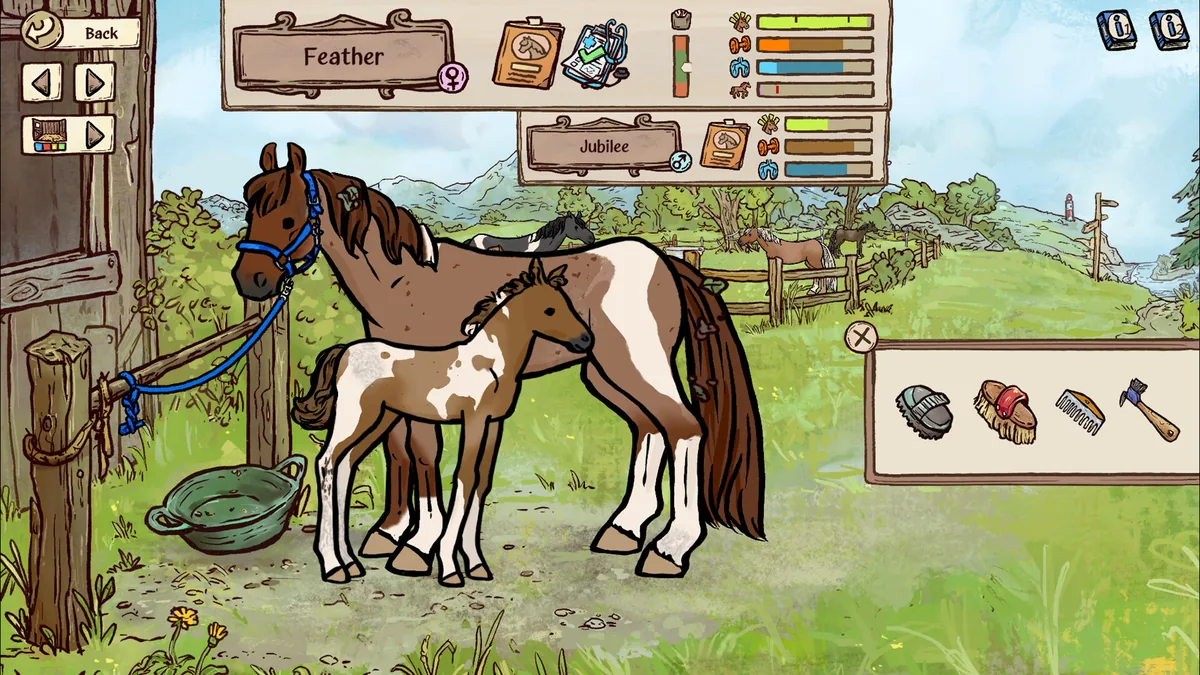
Breeding Guide: Foals, Stats, Semen
Horses of Hoofprint Bay breeding explained: pregnancy and foal timings, how potential and inbreeding work, fresh and frozen semen, and avoiding surprise foals.
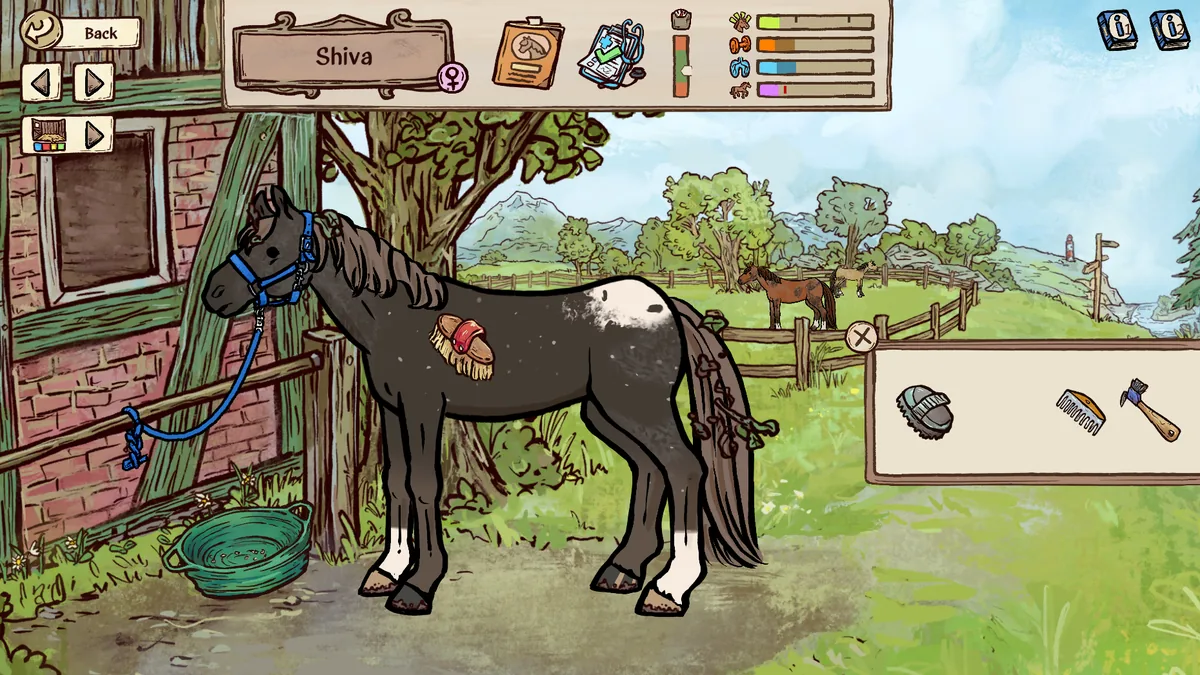
Coats: Colors, Patterns and Names
How Horses of Hoofprint Bay coats work: color inheritance, leopard and tobiano patterns, face markings, palette maker and the names players say change a coat.
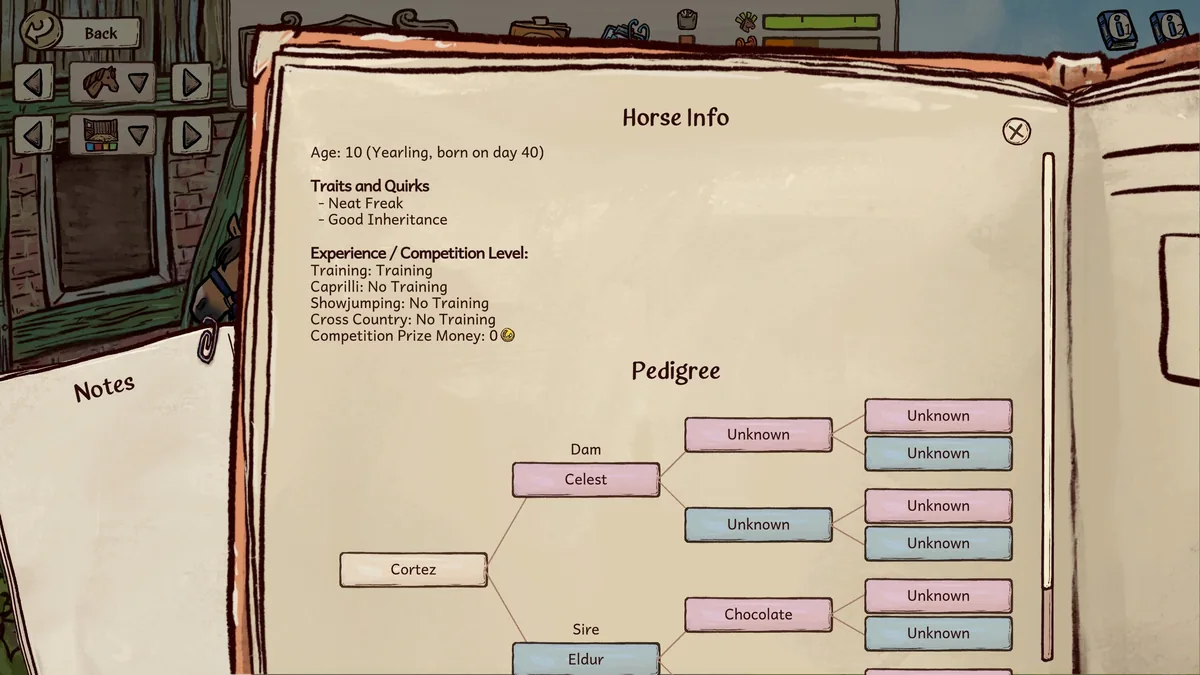
Horse Age: Days, Yearlings, Retiring
Horses of Hoofprint Bay horse age explained: why horses are 60 or 97, when foals and yearlings grow up, how age changes value, and when horses must retire.